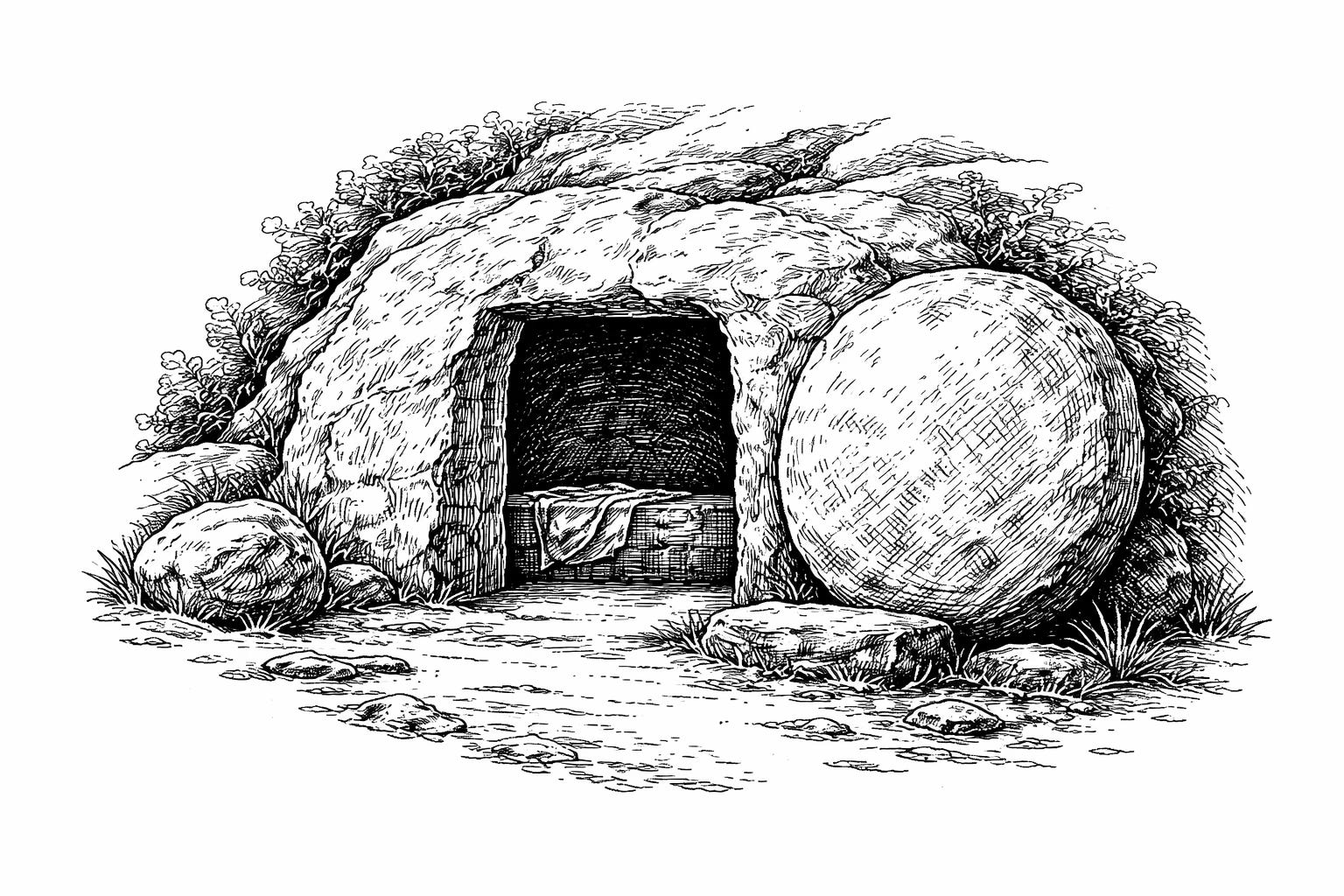
The Resurrection Is the Most Reasonable Explanation

Imagine you are a first-century Roman or Jewish authority in Jerusalem in the weeks following the crucifixion of Jesus of Nazareth. A movement has erupted in your city — built entirely on the claim that the man you just publicly executed has come back from the dead. It is spreading. It is destabilizing the people. It directly threatens your authority and public order.
You have one move available that ends it instantly.
Produce the body.
Walk it through the streets of Jerusalem. Let the crowds see it. Let the disciples see it. The movement collapses before sundown. Christianity never happens. The most influential religion in human history never gets off the ground.
They never made that move.
Not the Romans, who had every political incentive to do so. Not the Jewish authorities, who had orchestrated the execution. Not anyone — in the very city where the claim was being made, within walking distance of the tomb, while the proclamation was public and immediate.
That is not a minor historical detail. That is the problem that demands an explanation.
Start With What Is Actually on the Table
Strip away caricatures and the debate becomes much narrower than people assume.
There is broad agreement — even among skeptical scholars — on several core facts: Jesus of Nazareth existed. He was crucified under Pontius Pilate. His followers very quickly came to believe that He had risen from the dead and appeared to them. That belief transformed them permanently.
The argument is not over whether something happened.
The argument is over what explains it.
And that is where the difficulty begins.
The Disciples Are the Problem
The night Jesus was arrested, His disciples scattered. Peter — who had sworn he would die before denying Him — collapsed under the pressure of a servant girl and denied even knowing Him (Luke 22:54–62). After the crucifixion, they were hiding behind locked doors out of fear (John 20:19).
This is not the profile of men preparing to launch a coordinated deception.
And then something changes.
Within weeks, those same men are publicly preaching in Jerusalem — not in private, not in safe territory, but in the temple courts, within reach of the very authorities who had Jesus executed (Acts 5:42). They are arrested, beaten, and threatened. They do not adjust their message. They do not retreat. They do not negotiate.
They continue — and many of them die — rather than deny what they claim to have seen.
So apply the simplest test available to any alleged conspiracy:
What was the motive?
And did the pressure hold?
People will die for what they believe to be true. That is not unusual. What people do not do is knowingly suffer and die for a lie they themselves invented.
If the disciples fabricated the resurrection, then they were not mistaken — they were deceivers. And deceivers break. Under pressure. Under imprisonment. Under the threat of execution. Conspiracies collapse under far less.
Yet across time, geography, and persecution, there is no record of a recantation. No deathbed confession. No insider account explaining how the fraud was constructed.
They did not act like men protecting a lie.
They acted like witnesses.
The Alternatives Do Not Solve the Problem
At this point, alternatives are offered — not because they succeed, but because something must be said.
The disciples stole the body. Jesus didn’t really die. The tomb was mistaken. The resurrection accounts are late legends.
Take them seriously, and they collapse under their own weight.
The stolen-body theory requires frightened men — who had just fled for their lives — to organize a theft from a guarded tomb, then maintain that lie under sustained persecution without breaking. It also fails to explain why the authorities, who had every reason to stop the movement, never produced the body.
The wrong-tomb theory requires everyone — the women, the disciples, the authorities — to have gone to the wrong location, while the correct tomb remained known and unaddressed. It explains nothing about the transformation of the disciples.
The swoon theory requires a man scourged to the point of death, crucified, pierced, and buried to somehow revive, escape, and convince His followers not that He had barely survived, but that He had conquered death itself. Roman executioners were not careless. Their lives depended on finishing the job.
The legend theory collapses under chronology. Paul records eyewitness testimony — including named individuals — within a few years of the crucifixion (1 Corinthians 15:3–8). That is not enough time for myth to displace memory, especially in a culture saturated with living witnesses who could confirm or deny the claim.
These are not competing explanations. They are attempts to avoid one.
The Real Objection
At this point, the issue is no longer historical. It is personal.
If Christ rose from the dead, then God exists. Jesus is Lord. Judgment is real. Repentance is not optional. The resurrection is not an isolated miracle — it is the validation of every claim Jesus made about Himself and about you.
And that is the real pressure point.
The resistance is not primarily driven by a lack of evidence. It is driven by the implications of the evidence.
Follow the Evidence All the Way Through
The resurrection is not the easiest explanation. It is the one people are most inclined to avoid. But it remains the explanation that actually accounts for the data:
the empty tomb
the public proclamation in Jerusalem
the transformation of the disciples
the endurance of their testimony under persecution
the failure of every alternative to hold together under scrutiny
The question is not whether the resurrection is difficult to accept.
The question is whether anything else explains the evidence without collapsing.
Two thousand years of attempts have not produced a better answer.
The Verdict
The resurrection does not ask for a blind leap. It demands that you follow the evidence without stopping at the point where it becomes uncomfortable.
Because if Jesus walked out of that tomb, then the world is not what many have assumed it to be. Authority does not belong to us. Truth is not negotiable. And the One who rose has the right to be obeyed.
That is why the resurrection is resisted.
Not because it lacks evidence — but because it refuses to remain a theory.
It is a claim on your life. Will you obey the risen King?